Article: World Osteoporosis Day: Understanding the Link Between Osteoporosis and Incontinence
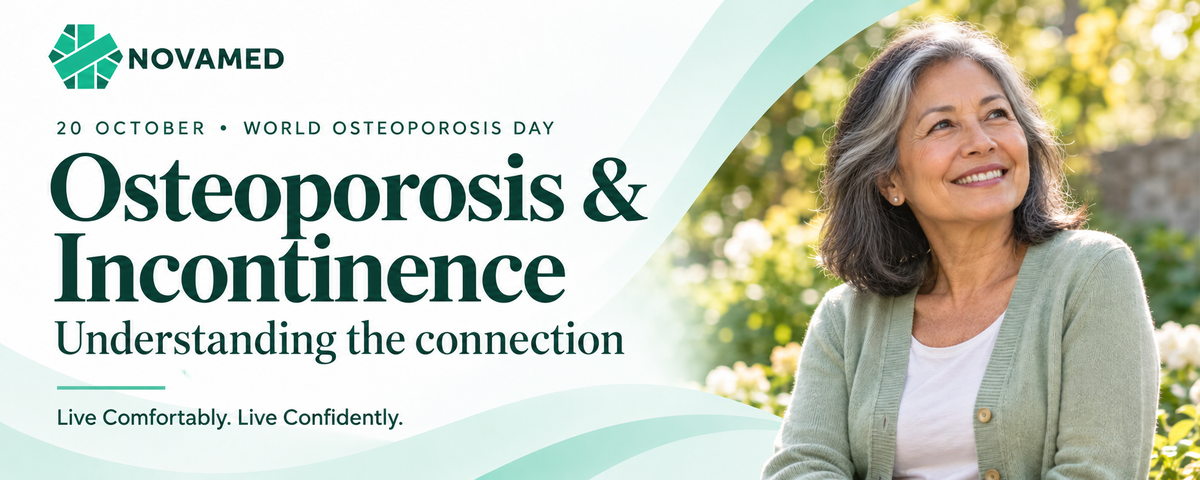
World Osteoporosis Day: Understanding the Link Between Osteoporosis and Incontinence
Today is World Osteoporosis Day, an opportunity to raise awareness of bone health and the steps we can take to protect our independence. This year's message, "Build Protect, Strengthen Your Bones For Life," highlights the importance of caring for your bones at every age.
When we think about osteoporosis, we usually think about fragile bones and fractures. Bladder leakage may not immediately come to mind. However, for someone living with osteoporosis, particularly after a fracture, managing continence can become more challenging.
At Novamed, we believe that understanding these challenges can help people seek support and feel more confident in everyday life.
What is osteoporosis?
Osteoporosis is a condition that makes bones weaker and more likely to break. It develops gradually and often goes unnoticed until a fracture occurs. The wrists, hips and spine are commonly affected.
Osteoporosis itself is usually not painful, but fractures can cause pain and difficulties with movement. Although it is more common in women after menopause, it can affect men and younger people too.
Does osteoporosis cause incontinence?
Having osteoporosis does not mean you will develop incontinence. Bladder leakage should not automatically be attributed to weak bones.
The connection is often indirect. Pain and reduced mobility after a fracture may make getting to the toilet harder, while menopause can affect both bone health and urinary health. These overlapping challenges help explain why someone might experience both conditions, without one necessarily causing the other.
Getting to the toilet can become more difficult
After a hip or spinal fracture, standing up, walking to the bathroom or adjusting clothing may take longer. Spinal fractures can also cause ongoing pain and changes in posture that make everyday movements uncomfortable.
If physical difficulties prevent someone from reaching or using the toilet in time, this is known as functional incontinence. In practical terms, this means that recovering from a fracture may create toileting difficulties even when bladder control itself has not changed.
Menopause can affect both bones and the bladder
Bone loss speeds up in the years following menopause. Lower oestrogen levels can also affect tissues around the bladder and urethra, contributing to symptoms such as urinary urgency, increased frequency and recurrent urinary infections.
These changes can occur alongside osteoporosis. If you notice new urinary symptoms during or after menopause, speak to your GP rather than assuming they are something you simply have to live with.
Constipation can add to the problem
Constipation can contribute to bladder symptoms, and straining can put pressure on the pelvic floor. Staying mobile may be more difficult after a fracture, making bowel care another useful part of recovery.
If constipation or urinary symptoms develop while taking medication, ask your GP or pharmacist for advice. Some medicines can affect bladder function, but you should not stop prescribed treatment without discussing it first.
Practical ways to support bone health and continence
Keep moving with advice suited to you
Appropriate weight-bearing activity, muscle strengthening and balance exercises support bone health and help reduce falls. If you have osteoporosis or have recently had a fracture, ask your healthcare professional or physiotherapist which activities are suitable for you.
If leakage is making you avoid exercise, mention this too. A tailored plan can take both your bone health and bladder symptoms into account.
Ask about pelvic floor support
Pelvic floor exercises can help reduce some types of urinary leakage, but correct technique matters. A pelvic health physiotherapist or continence professional can assess your symptoms and advice on suitable exercises. Improvement often takes several months of regular practice.
Stay hydrated and look after your bowels
Drinking less to avoid leaks can make matters worse. Insufficient fluid can lead to concentrated urine that irritates the bladder and can also worsen constipation.
Drink regularly unless your healthcare professional has advised a fluid restriction. Eating enough fibre and staying as active as you safely can may help keep your bowels regular. Reducing caffeine may also help if it aggravates your bladder symptoms.
Make toilet access easier
Think about what slows you down when you need the bathroom. Practical changes to consider include:
- Keeping the route to the toilet clear and well lit.
- Wearing clothing that is easy to remove.
- Keeping prescribed walking aids within reach.
- Asking an occupational therapist whether toilet equipment or a bedside commode would help.
The aim is to make toileting safer and easier, particularly while recovering from a fracture. Physical barriers and difficulty managing clothing are recognised contributors to functional incontinence.
When should you seek help?
Speak to your GP or continence service about new, persistent or worsening leakage. Urinary incontinence has several possible causes, and assessment can identify treatment and support appropriate to you. It should not be dismissed as an inevitable part of ageing or osteoporosis.
Seek emergency help if back pain occurs with new difficulty passing urine, loss of bladder or bowel control, numbness around genitals or anus, or weakness or numbness in both legs. Call 999 or go to A&E. These symptoms need urgent assessment.
Everyday confidence with Novamed
Alongside medical advice, continence products can provide support with managing leaks. Choosing protection should take account of your leakage level, comfort, fit and how easily you can put on or change the product.
At Novamed, our range includes light incontinence pads, pull-up pants, adult all-in-ones and protective underpads. Our team can help you explore product options for your daily routine. Absorbent products manage leakage; they do not treat osteoporosis or the underlying cause of incontinence.
This World Osteoporosis Day, let's make room for conversations about both bone health and bladder health. Asking for help is a positive step towards maintaining comfort, dignity and independence.
Explore our range at novamedpads.co.uk
Live Comfortably. Live Confidently
This article provides general information and does not replace personalised advice from a qualified healthcare professional.