

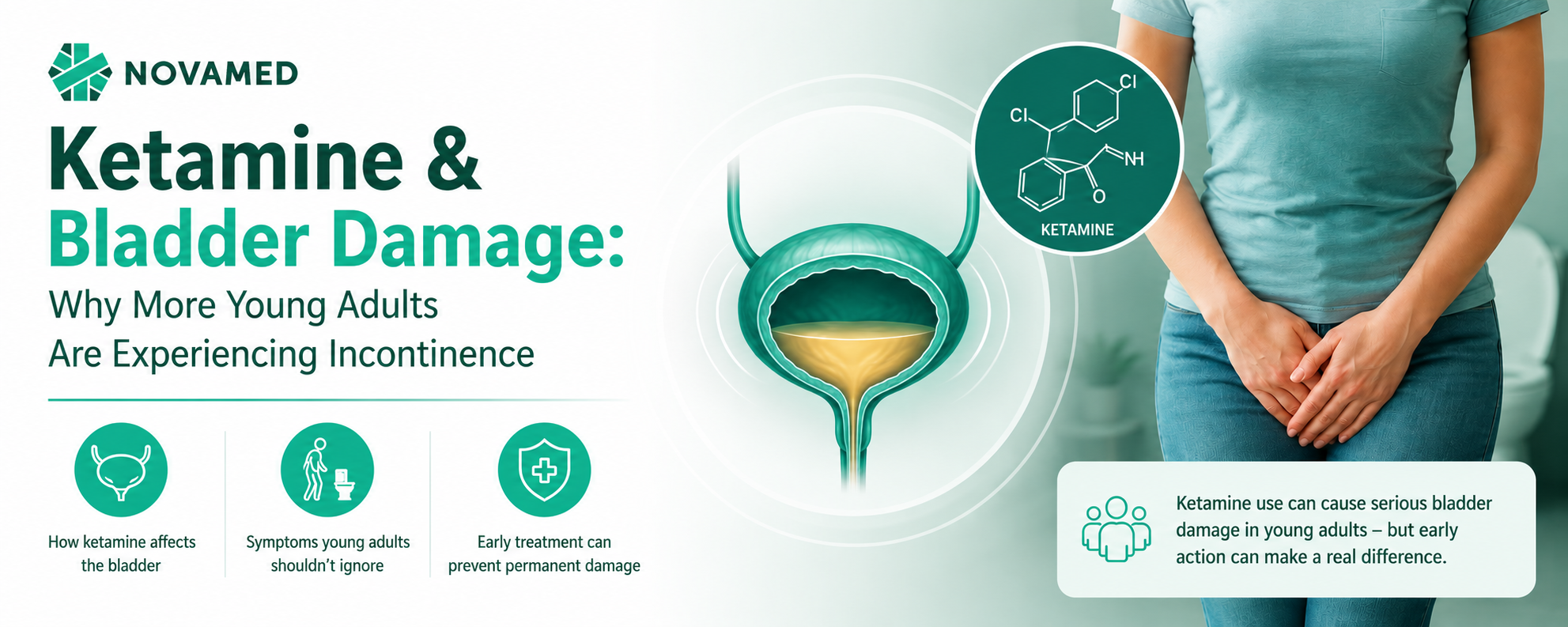
Ketamine and Bladder Damage: Why More Young Adults are Experiencing Incontinence
For many people, urinary incontinence is associated with ageing, childbirth or certain medical conditions. However, healthcare professionals across the UK are seeing an increasing number of young adults developing severe bladder problems linked to recreational ketamine use.
Known as ketamine bladder syndrome or ketamine-induced cystitis, this condition can have life-changing consequences, including frequent urination, chronic pain, blood in the urine, and urinary incontinence. In some severe cases, permanent bladder damage may require major reconstructive surgery or even bladder removal.
As ketamine use continues to rise among younger people, understanding the risks has never been more important.
How Does Ketamine Damage the Bladder?
Ketamine is broken down by the liver before being excreted through the urine. During this process, ketamine and its metabolites come into direct contact with the lining of the bladder.
Over time, repeated exposure causes inflammation and damages the protective bladder lining. This leads to:
- Chronic inflammation of the bladder wall
- Loss of the bladder's protective lining
- Scarring and thickening of bladder tissue
- Reduced bladder capacity
- Increased bladder sensitivity
Eventually, the bladder becomes smaller, stiffer and less able to store urine, resulting in severe urinary symptoms. Research suggests the severity of bladder damage generally increases with both the amount and duration of ketamine use.
Why Does It Lead to Urinary Incontinence?
A healthy bladder gradually fills with urine before singalling when it is time to empty. Ketamine-related bladder damage disrupts this process.
As the bladder shrinks and becomes inflamed, it can no longer hold normal volumes of urine. Many people experience:
- A sudden, overwhelming urge to urinate
- Frequent trips to the toilet, sometimes every 15-30 minutes
- Difficulty holding urine long enough to reach a toilet
- Night-time urination (nocturia)
- Leakage of urine (urge incontinence)
- Bedwetting in severe cases
For young adults, these symptoms can be particularly distressing, affecting work, education, social life, and mental wellbeing.
Why Young Adults are Most at Risk
Although ketamine has legitimate medical uses under professional supervision, recreational use has increased significantly among people aged 16-24 in the UK.
Because symptoms often develop gradually, many users continue taking ketamine long before realising the damage being caused. By the time bladder symptoms become severe, irreversible scarring may already have occurred.
Healthcare professionals are now reporting increasing numbers of patients in their late teens and twenties presenting with symptoms more commonly associated with much older adults.
Warning Signs That Should Never Be Ignored
Early recognition is essential.
Seek medical advice if you experience:
- Frequent urination during the day or night
- Pain when passing urine
- Blood in the urine
- Bladder or pelvic pain
- Sudden urinary urgency
- Urinary leakage or incontinence
- Difficulty emptying the bladder completely
These symptoms may indicate developing bladder damage that requires urgent assessment.
Can the Damage Be Reversed?
The single most important treatment is stopping ketamine use immediately.
For some individuals, particularly when symptoms are recognised early, bladder function can improve significantly after stopping ketamine. Studies have shown that many users experience symptom improvement following cessation. However, prolonged use can result in permanent damage that may not fully recover.
Treatment may include:
- Medication to reduce bladder inflammation
- Pain management
- Bladder training
- Pelvic floor physiotherapy
- Urology specialist care
- Surgery in advanced cases
The earlier treatment begins, the better the chance of preserving bladder function.
Living with Ketamine-Related Incontinence
While receiving medical treatment, managing symptoms is essential to maintaining comfort, dignity and confidence.
High-quality continence products can help people stay active during recovery by providing discreet protection against urinary leakage. Choosing products with excellent absorbency, odour control and skin-friendly materials can make everyday life more manageable while underlying health issues are addressed.
At Novamed Pads, we understand that urinary incontinence can affect people of any age. Our range of continence products is designed to offer reliable protection, comfort and discretion for those managing temporary or long-term bladder problems.
The Bottom Line
Ketamine-related bladder damage is becoming an increasingly recognised health issue among young adults. What may begin as occasional urgency can progress to severe bladder dysfunction, chronic pain and urinary incontinence if left untreated.
The encouraging news is that early diagnosis and stopping ketamine use can significantly improve outcomes for many people. Recognising the symptoms early and seeking medical advice may prevent permanent damage and protect long-term bladder health.
If you or someone you know is experiencing urinary symptoms after using ketamine, don't ignore them. Speaking to a GP or healthcare professional as early as possible could make all the difference.