

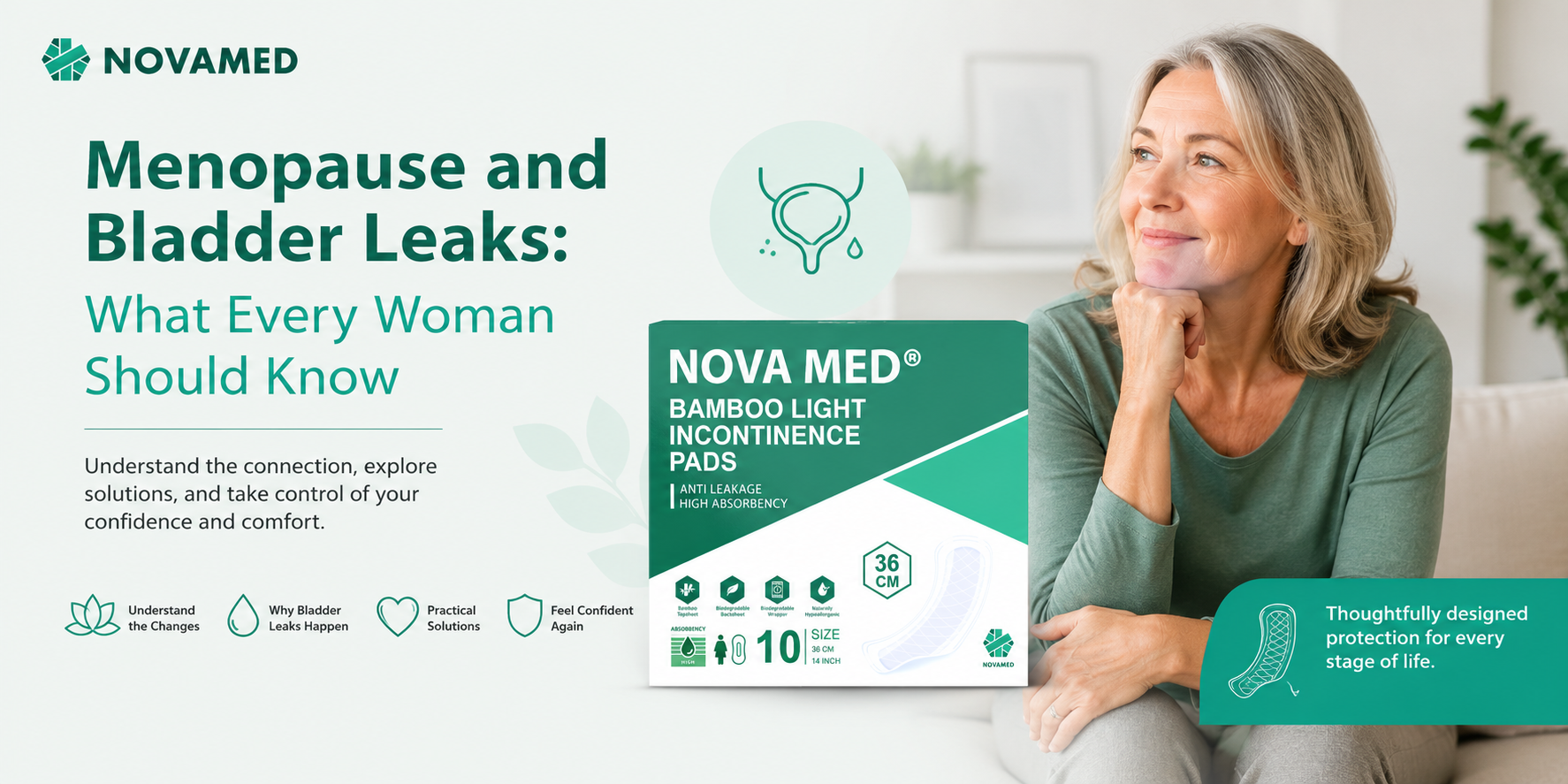
Menopause and Bladder Leaks: What Every Woman Should Know
Menopause brings many changes to a woman's body, but one symptom that often catches women by surprise is bladder leaks. If you've noticed unexpected urine leaks when laughing, coughing, exercising, or rushing to the toilet, you're not alone.
Millions of women experience menopause bladder leaks, yet many suffer in silence because they feel embarrassed or believe it's simply something they must "put up with". The trust is that urinary incontinence during menopause is common, manageable and nothing to be ashamed of.
Understanding why bladder weakness happens after 50 can help you regain confidence and find the right support and protection for your lifestyle.
Why Does Menopause Cause Bladder Leaks?
During menopause, oestrogen levels naturally decline. Oestrogen plays an important role in keeping the bladder, urethra, and pelvic floor muscles healthy and strong.
As hormone levels drop, the tissues around the bladder can become thinner and weaker. This may lead to:
- Increased urgency to urinate
- More frequent trips to the toilet
- Difficulty holding urine
- Small leaks during physical activity
- Night-time bladder issues
For many women, these changes develop gradually, making it easy to dismiss symptoms at first.
Common Types of Urinary Incontinence During Menopause
There are several types of urinary incontinence in menopause, but the most common include:
Stress Incontinence
Stress incontinence happens when pressure is placed on the bladder. You may leak urine when:
- Sneezing
- Laughing
- Coughing
- Exercising
- Lifting heavy objects
This type of bladder leak is often linked to weakened pelvic floor muscles.
Urge Incontinence
Urge incontinence causes a sudden, intense need to urinate that can be difficult to control. Some women may not reach the bathroom in time.
Mixed Incontinence
Many women experience a combination of both stress and urge incontinence symptoms.
What Causes Bladder Weakness After 50?
While menopause is a major factor, several other changes can contribute to bladder weakness after 50, including:
- Ageing pelvic floor muscles
- Pregnancy and childbirth history
- Weight gain
- Chronic coughing
- Certain medications
- Reduced physical activity
These factors can weaken bladder control over time, especially during and after menopause.
Lifestyle Changes That Can Help
The good news is that small lifestyle adjustments can make a significant difference in managing menopause-related bladder leaks.
Strengthen Your Pelvic Floor
Pelvic floor exercises, often called Kegel exercises, help strengthen the muscles that support the bladder.
Consistency is key. Many women notice improvements after several weeks of regular practice.
Maintain a Healthy Weight
Excess weight increases pressure on the bladder and pelvic floor. Even modest weight loss may help reduce leaks.
Watch Your Diet
Some foods and drinks can irritate the bladder, including:
- Caffeine
- Alcohol
- Spicy foods
- Fizzy drinks
Reducing these triggers may help improve bladder control.
Stay Hydrated
Some women drink less water to avoid leaks, but dehydration can actually irritate the bladder further. Drinking enough fluids is important for bladder health.
Choosing the Right Protection for Everyday Confidence
Finding discreet and comfortable protection can help you stay active and confident throughout menopause.
When choosing products for menopause bladder leaks, look for:
- Fast absorption
- Odour control
- Thin, discreet materials
- Soft, breathable materials
- Secure fit for day and night comfort
At Novamed Pads, we understand that every woman's experience is different. Our bladder weakness products are designed to provide reliable protection without compromising comfort or confidence.
Whether you experience occasional leaks or more frequent symptoms, the right protection can help you continue enjoying daily life with peace of mind.
When Should You Speak to a Doctor?
Although bladder leaks are common during menopause, they should not be ignored if symptoms worsen or affect your quality of life.
Speak with you GP or healthcare professional if you experience:
- Pain while urinating
- Blood in urine
- Frequent urinary infections
- Sudden severe incontinence
- Significant disruption to daily life
Treatment options may include pelvic floor therapy, medications, lifestyle guidance, or specialist support.
You're Not Alone
Experiencing urinary incontinence during menopause can feel frustrating and emotional, but it's important to remember that you are not alone. Bladder leaks are incredibly common among women over 50, and effective support is available.
With the right information, lifestyle adjustments, and discreet protection, you can continue to live confidently and comfortably through every stage of menopause.
Explore the range of discreet bladder weakness products at Novamedpads.co.uk and find the support that works for you.
Bladder and bowel incontinence may be caused by conditions which can be treated medically. Please consult your physician for medical advice and guidance. All sources used in this article are cited below.